
Plumbing Materials in Bangalore: Complete Guide for Homeowners & Contractors
Choosing the right plumbing materials in Bangalore is one of the most important decisions in any construction project. Whether you are building a new home, renovating a bathroom, or handling a commercial project, selecting durable and high-quality plumbing materials ensures long-term performance and prevents costly repairs.
This guide explains the different types of plumbing pipes, fittings, quality checks, installation considerations, and common mistakes to avoid in Bangalore’s construction environment.
If you are planning your material requirements, you can explore different plumbing pipes available in Bangalore to understand available options before finalizing your plumbing layout.
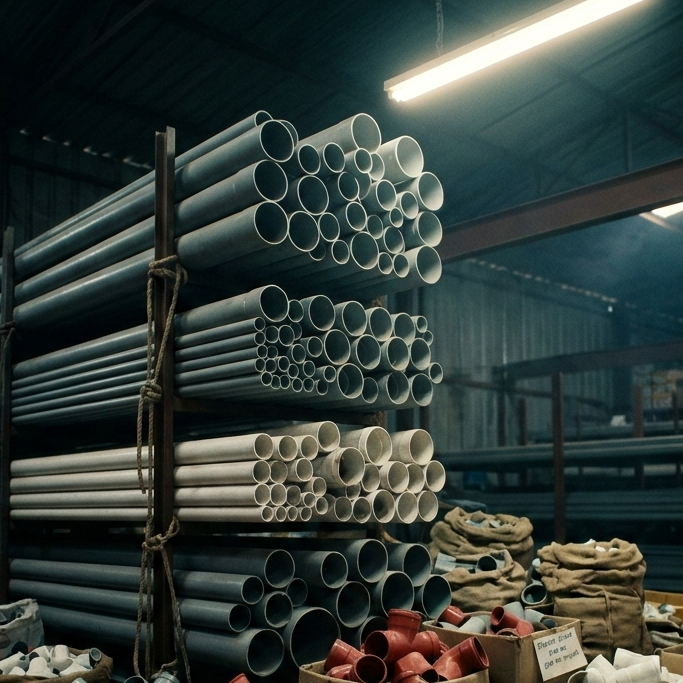
Types of Plumbing Materials Used in Modern Construction
Understanding different plumbing materials helps you make the right choice based on application.
PVC Pipes (Polyvinyl Chloride)
PVC pipes are widely used for cold water supply and drainage systems.
Best for:
- Cold water lines
- Drainage systems
- Vent piping
Advantages:
- Lightweight
- Easy to install
- Corrosion resistant
- Affordable and durable
PVC is commonly used in residential buildings across Bangalore for internal drainage systems.
For drainage applications, contractors often prefer PVC drainage pipes because they provide smooth water flow and long service life.
CPVC Pipes (Chlorinated Polyvinyl Chloride)
CPVC pipes are designed to handle both hot and cold water.
Best for:
- Hot water supply lines
- Kitchen and bathroom plumbing
- Internal pressure lines
Advantages:
- High temperature resistance
- Strong joint bonding
- Long lifespan
- Safe for drinking water
CPVC is preferred for modern apartments and villas where hot water systems are installed.
If your project includes geysers or solar heaters, consider using CPVC pipes for hot water systems to ensure temperature resistance and safety.
For certification standards, always verify the ISI marking issued by the Bureau of Indian Standards to confirm product authenticity.
UPVC Pipes (Unplasticized PVC)
UPVC pipes are rigid and strong, mainly used for drainage and sewage systems.
Best for:
- Underground drainage
- Wastewater disposal
- Rainwater pipelines
When planning underground layouts, proper alignment with local building regulations is important. You may refer to guidelines from the Bruhat Bengaluru Mahanagara Palike for compliance requirements related to drainage and construction approvals.
GI Pipes (Galvanized Iron)
GI pipes were traditionally used in older constructions.
Limitations:
- Can rust over time
- Heavier than PVC
- Requires threading during installation
Most modern projects in Bangalore now prefer PVC or CPVC over GI pipes.
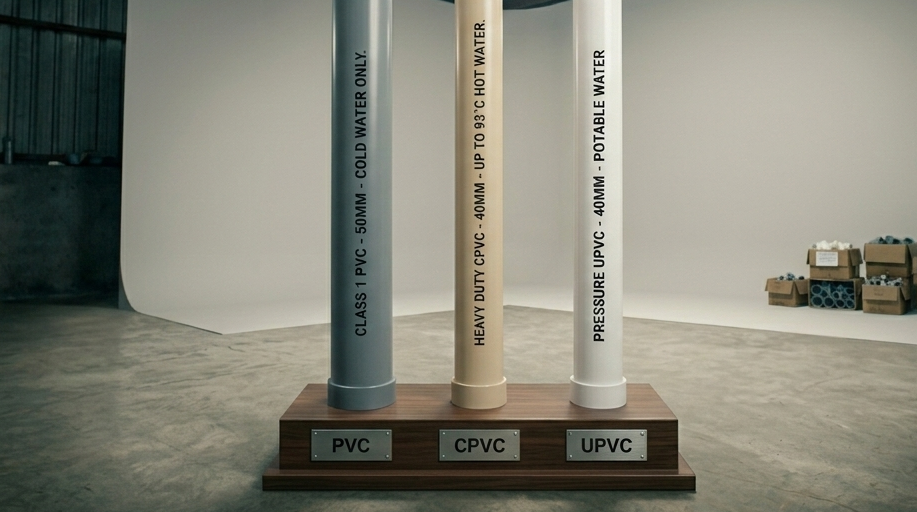
PVC vs CPVC vs UPVC – Which Should You Choose?
| Feature | PVC | CPVC | UPVC |
|---|---|---|---|
| Suitable for Hot Water | No | Yes | No |
| Cold Water Supply | Yes | Yes | No |
| Drainage | Yes | Limited | Yes |
| Durability | High | Very High | High |
| Installation | Easy | Easy | Easy |
If your project includes hot water systems, CPVC is the safer choice. For drainage and sewage systems, UPVC is more suitable.
How to Identify Good Quality Plumbing Materials
Poor quality plumbing materials can cause leakage, pressure failure, and expensive repairs. Here’s how to check quality:
- Look for ISI certification mark
- Check uniform wall thickness
- Inspect proper brand embossing
- Avoid uneven coloring or surface cracks
- Ensure joints fit tightly without gaps
- Always insist on proper billing and warranty
For contractors, consistency in pipe diameter and pressure rating is critical.
Common Plumbing Mistakes in Bangalore Homes
Many leakage issues arise due to installation errors rather than material failure.
Common mistakes include:
- Mixing incompatible pipe types
- Incorrect slope in drainage lines
- Using low-quality fittings
- Poor solvent cement application
- Ignoring water pressure requirements
Proper plumbing planning reduces maintenance costs significantly.
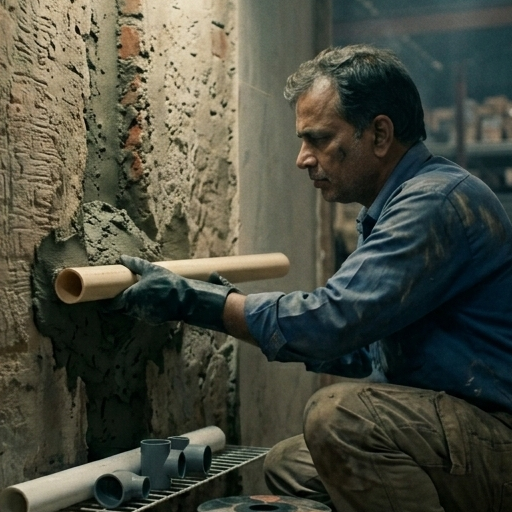
Plumbing Materials Checklist for New House Construction
Here is a simplified checklist for homeowners:
Underground Stage
- Drainage pipes
- Sewer pipes
- Inspection chambers
Structural Stage
- Internal water supply pipes
- Pipe clamps and supports
- Pipe insulation (if required)
Finishing Stage
- Bathroom fittings
- Kitchen plumbing fittings
- Tap connectors
- Overhead tank connections
Having a structured checklist ensures smoother project execution.
How to Store Plumbing Materials at Construction Sites
Improper storage reduces pipe lifespan.
Best practices:
- Store pipes horizontally on flat surfaces
- Avoid direct sunlight exposure for long periods
- Keep fittings in covered containers
- Prevent contact with chemicals or oils
- Avoid stacking heavy loads on pipes
Storage discipline is especially important during Bangalore’s hot summers.
Frequently Asked Questions
What type of pipe is best for home plumbing?
CPVC is generally recommended for internal water supply, especially if hot water is involved.
Are PVC pipes safe for drinking water?
PVC pipes are safe for cold drinking water if they meet ISI standards.
How long do plumbing pipes last?
High-quality PVC or CPVC pipes can last 25–50 years when properly installed.
Can different brands of pipes be mixed?
It is not recommended because joint compatibility may vary.
What plumbing materials are needed for a 2BHK house?
Typically: CPVC pipes, drainage pipes, elbows, tees, connectors, valves, bathroom fittings, and water tank connectors.

